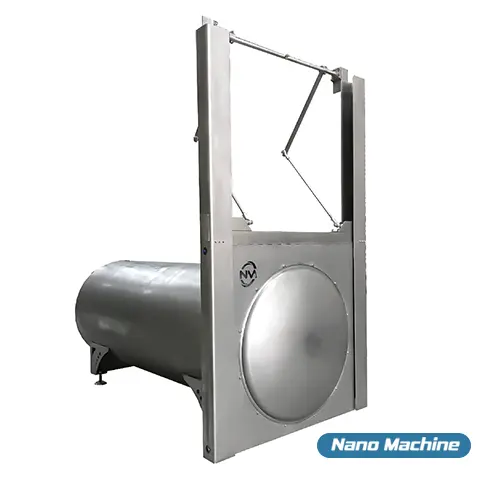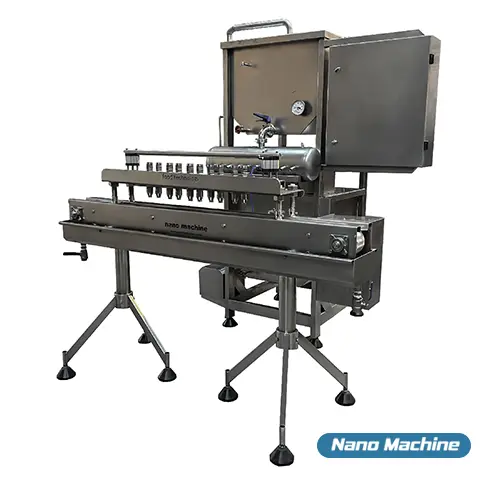

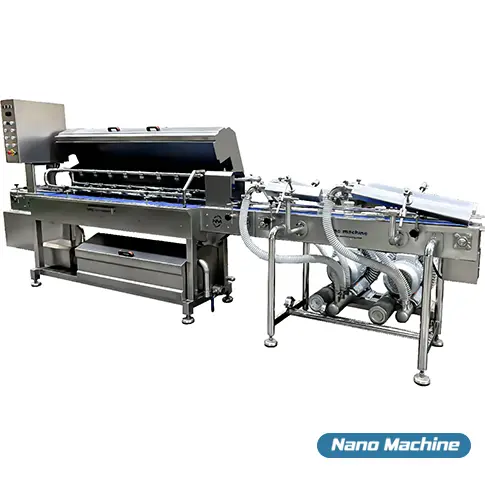
Can washing machine: clean, hygienic cans ready for packaging
Spray nozzles with stable water pressure
After filling and seaming, some oil, brine or food particles usually remain on the body and lids of the cans. If they are not washed off, in the autoclave and the warehouse they turn into stains, unpleasant odours, rust and a poor can appearance, and they can even affect label adhesion and later packaging steps. The Nano Machine can washing machine removes this residue completely and automatically.
The machine works with spray nozzles and an in-house built stainless steel pump that supplies the required water pressure steadily. An even spray of high-pressure water washes every surface of the can as it passes through the machine. The machine fits easily into the production line and carries out the washing process without operator intervention.
How does a can washing machine work?
The pump and the main parts in contact with water are made of stainless steel so that they resist constant moisture and brine. To learn more about this material, see the Stainless steel article on Wikipedia.
Seamed cans enter
After the seamer, the cans enter the can washing machine on the conveyor.
Water pressure supply
The in-house built stainless steel pump supplies stable water pressure to the nozzles.
Complete body washing
The spray nozzles, with an even spray, remove oil and residue from the can body and lid.
Continuous flow
The cans pass through the washing section without stopping, in step with the line speed.
Clean cans exit
The washed cans are ready for sterilisation or the next packaging steps.
Can washing machine price
The price of a can washing machine depends on the capacity you need, the length of the washing section, the number of nozzles and any customisation. Nano Machine sells this machine directly, with no intermediaries, and our engineers review your capacity and line layout before you buy. For the stage before seaming, see the exhaust box and the other canned fish production line machinery.
Direct from the manufacturer
Factory price, with no intermediaries.
One-year warranty
Full machine warranty for one year.
Ten years of after-sales service
Spare parts and service for up to ten years.
Installation and commissioning
Technicians sent to sites in Iran and abroad (Turkey and the Persian Gulf region).
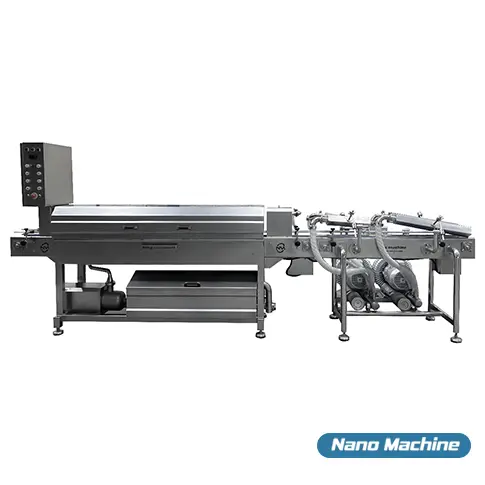
Can washing machine technical specifications
The Nano Machine can washing machine is built with a capacity of 150 cans per minute, 5.5 kW power, dimensions of 5000 × 800 × 2000 mm and a weight of about 550 kg. The technical specifications can be customised to suit the line capacity, the can size and the level of soiling.
Why is washing cans after seaming essential?
Oil and brine left on the can burn at the high temperature of the autoclave and leave permanent stains. In the warehouse, the same residue provides a breeding ground for mould and odours and contributes to rust on the metal body. A dirty can looks like a low-quality product to the consumer, even if its contents are perfectly sound.
By removing this residue before sterilisation and packaging, the can washing machine keeps the finished product looking professional, prevents contamination from carrying over to later stages and improves label adhesion and secondary packaging.
In-house built stainless steel pump: durability in a wet environment
The pump of the can washing machine is built by Nano Machine from stainless steel, so it is highly resistant to corrosion from water and brine and keeps water pressure stable through long shifts. This robust design extends the service life of the machine and lowers repair and maintenance costs.
- Complete, hygienic washing of the can body and lid
- Better product appearance with no stains
- No contamination carried over to later stages
- Corrosion-resistant in-house built stainless steel pump
- Automatic operation in step with line speed
- Easy to operate and maintain
For an up-to-date price of the can washing machine, technical advice and a design sized to your canning line, contact the Nano Machine team.
Applications of the can washing machine
The Nano Machine can washing machine can be used in any line where filled, sealed cans need washing before sterilisation or packaging, including:
Canned tuna and products in oil
Removing residual oil from tuna cans after oil dosing and seaming.
Canned meat and ready meals
Washing canned meat and ready-meal cans before the autoclave.
Canned vegetables and legumes
Removing brine and residual particles from vegetable and legume cans.
Other canned products
Improving the hygiene and appearance of any food product packed in metal cans.
Impact on quality and productivity
Automatic can washing removes the need for manual cleaning, maintains line speed, and the hygienic appearance of the cans increases customer satisfaction and brand reputation. Fewer returns caused by stained or rusty cans also lowers production costs significantly.
For best maintenance, we recommend checking the nozzles daily to prevent clogging, cleaning the filter and the water tank, and inspecting the pump periodically. The Nano Machine after-sales team teaches this routine during commissioning, and spare parts are supplied for up to ten years. Adjusting the nozzle angle to the height of the cans also ensures that the lid and bottom of every can are washed thoroughly.
Why the Nano Machine can washing machine?
Nano Machine builds complete canned fish production lines, from fish cooking blanchers and fillers to the tuna oil dosing machine, brine dosing machine, exhaust box and can washer. The can washing machine is designed to work together with this equipment, based on experience from projects in Iran and exports to Turkey and the Persian Gulf countries.
Summary for production managers
With a capacity of 150 cans per minute, high-pressure spray nozzles and a durable stainless steel pump, the Nano Machine can washing machine leaves canned food cans clean and hygienic after seaming and prevents stains, rust and product returns.
To buy a can washing machine, share your line capacity and can sizes with the Nano Machine team to receive a technical proposal and a factory-direct price.